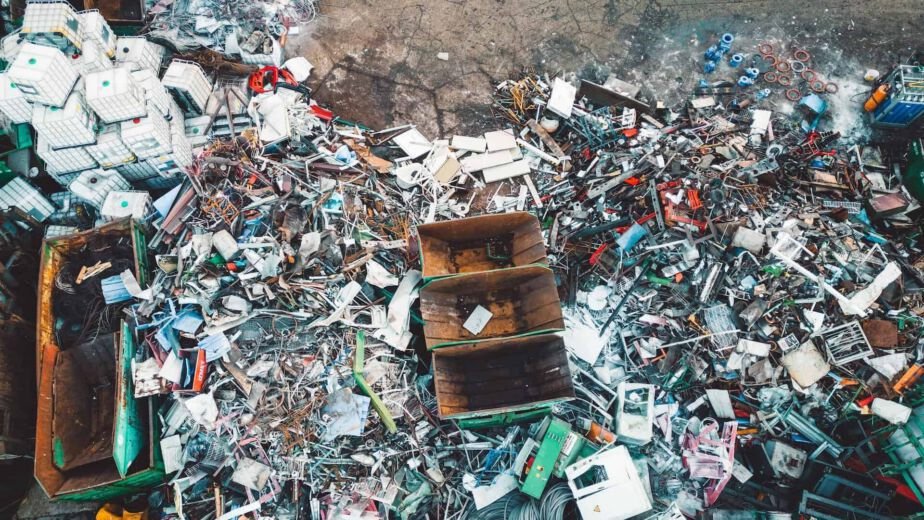
Most people know that old electronics should not go in the bin. Far fewer know why, what the alternatives are, or what they are actually required to do under Ghanaian law.
This guide covers everything you need to know about e-waste — from what qualifies as electronic waste, to the specific substances that make it dangerous, to your obligations as a business, and to the practical steps for responsible disposal.
What Is E-Waste?
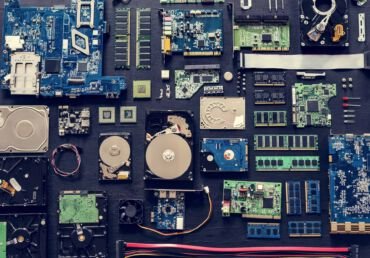
Electronic waste — commonly called e-waste or WEEE (Waste Electrical and Electronic Equipment) — refers to any discarded device that has a plug, battery, or electrical component. The category is broader than most people assume.
| Common E-Waste Categories • Desktop computers and monitors • Laptops and tablets • Mobile phones and smartphones • Servers and networking equipment • Printers, scanners, and copiers • Keyboards, mice, and peripherals • External hard drives and USB storage | Often Overlooked Categories • Televisions and display screens • Air conditioning units • Refrigerators and freezers • Electric fans and heaters • Power tools and equipment • Medical and laboratory equipment • Solar panels and inverters |
Why E-Waste Is Different From Other Waste
Electronic devices contain both valuable recoverable materials and highly toxic substances — often in the same component. This dual nature is what makes e-waste uniquely challenging.
The Valuable Recoverable Materials
A tonne of mobile phones contains more gold than a tonne of gold ore. E-waste is genuinely resource-rich — and formal recycling recovers these materials for re-entry into manufacturing supply chains.
| Material | Found In | Recovery Value |
| Gold | Circuit boards, connectors | High — used in electronics manufacturing |
| Copper | Wiring, circuit boards | High — major industrial metal |
| Aluminium | Casings, heat sinks | High — widely recyclable |
| Silver | Contacts, circuit boards | Moderate — industrial and jewellery use |
| Palladium | Capacitors, semiconductors | Very high — rare earth demand |
| Plastic | Casings, keyboards, cables | Moderate — dependent on grade |
The Hazardous Substances
The same devices that contain valuable metals also contain substances that are acutely toxic to human health and the environment — and that become dangerous when devices are burned, crushed, or broken apart without appropriate protection.
- Lead — found in circuit boards and CRT screens; damages the nervous system, kidneys, and reproductive organs
- Mercury — found in fluorescent backlights and switches; a potent neurotoxin that accumulates in the food chain
- Cadmium — found in batteries and semiconductors; classified as a human carcinogen
- Hexavalent chromium — used in metal coatings; highly toxic and carcinogenic
- Brominated flame retardants — used in plastic casings; release dioxins when burned
When e-waste is burned in open air — the dominant informal processing method — these substances become airborne. When it is dissolved in acid to recover metals — another informal method — the resulting liquid contaminates soil and groundwater. The communities near processing sites bear a disproportionate burden of this contamination.
Your Legal Obligations Under Ghanaian Law
The Hazardous and Electronic Waste Control and Management Act (Act 917) establishes a legal framework for e-waste management in Ghana. Key requirements for organisations include:
- Businesses that generate e-waste have a duty of care in its disposal — including ensuring it reaches a licensed processor
- E-waste may not be disposed of in landfills or through general waste streams
- Organisations that export e-waste are subject to additional licensing requirements
- The EPA has authority to inspect, investigate, and penalise non-compliant organisations
| The duty of care does not end when the equipment leaves your premises. It ends when you have documented evidence that it reached a licensed processing facility. |
A Practical Disposal Guide by Device Type
Different devices require slightly different approaches. Here is a quick reference.
| Device Type | Key Consideration | Required Action |
| Computers & Laptops | Data storage — hard drive or SSD contains recoverable data | Certified data destruction + e-waste recycling |
| Mobile Phones | Data + battery (hazardous if punctured or incinerated) | Certified data destruction + specialist recycling |
| Servers | Large data volumes + hazardous materials in high concentration | Certified data destruction + licensed disposal |
| Monitors / TVs | CRT screens contain lead; LCD screens contain mercury | Specialist e-waste recycling only — no landfill |
| Batteries / UPS | Highly toxic — must not be landfilled or incinerated | Specialist hazardous waste / battery recycling |
| Printers & Copiers | Toner cartridges + circuit boards with hazardous materials | E-waste recycling — separate toner cartridges |
| Networking Equipment | May contain legacy data if not factory reset + hazardous PCBs | Wipe / factory reset + certified e-waste recycling |
| “E-waste is not rubbish. It is recoverable value — and recoverable liability. Handle it accordingly.” |
| Need to dispose of electronic equipment responsibly? → Get a Free Collection Assessment (/contact) |